Following the BCO conference in Edinburgh, I’ve been reflecting on what workplace means today – and what it adds to the creation of a place, whether town, city, or industrial estate.
At shedkm, re-invention and re-use have always been key, bringing vitality back to neglected places through bold insertions and creative thinking. Early projects in the North such as Matchworks proved shedkm’s ability to transform redundant structures into progressive workplace environments, creating an alternative ‘office’ offer and making a lasting impact on people’s day-to-day lives through bold, resourceful design.
Early lessons in creating more with less began to take on a more strategic role when we were invited to provide regenerative workspace possibilities in key locations across the country. Many of our commercial projects emerged as “gateway” plots – activating places by drawing new economic activity to underused areas, often alongside major infrastructure delivery and connectivity.
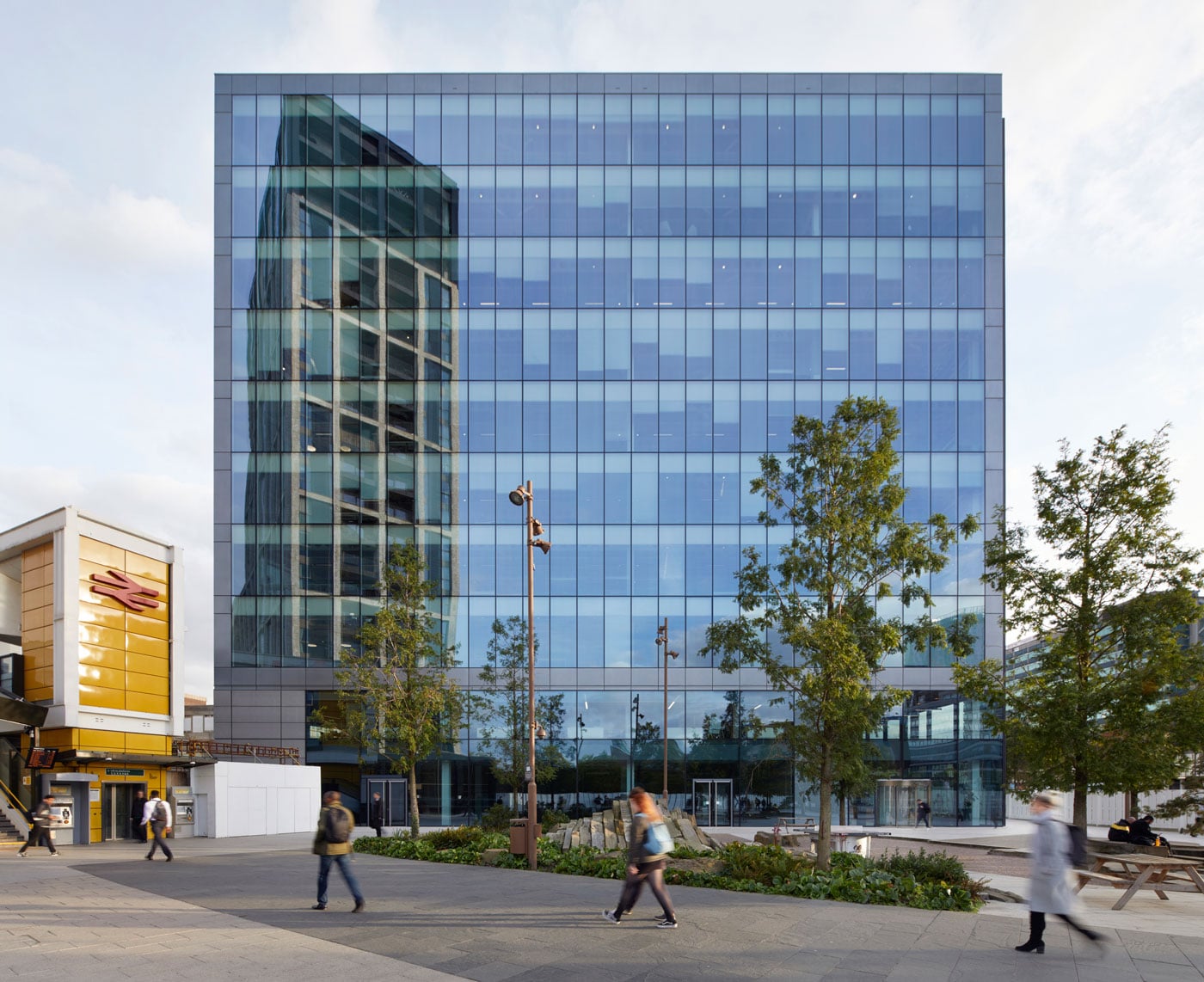
One Ruskin Square, East Croydon
We have become experts at creating industrial retrofit chic, but perhaps more important is that we have managed to follow the markets, keeping to our core principles and remaining an attractor to occupiers through commercially viable design. Government departments, higher education providers, scientists and councils have all been drawn to our unique offer on what the workplace is and how we drive forward new places, not just somewhere to work, but somewhere people actively enjoy.
We consider economic flexibility, usability, and comfort from the outset, resulting in initially speculative workspaces that are able to react to the market by offering versatility beyond their designed purpose. Having delivered Ruskin Square as creative multi-tenanted studio space, HMRC took on the entire building as their offices, identifying its quality of space and strategic location. Meanwhile Sheffield Hallam University have taken on the first six floors of the newly completed 4 Arbour Street, the first commercial building at the gateway to Brent Cross Town.
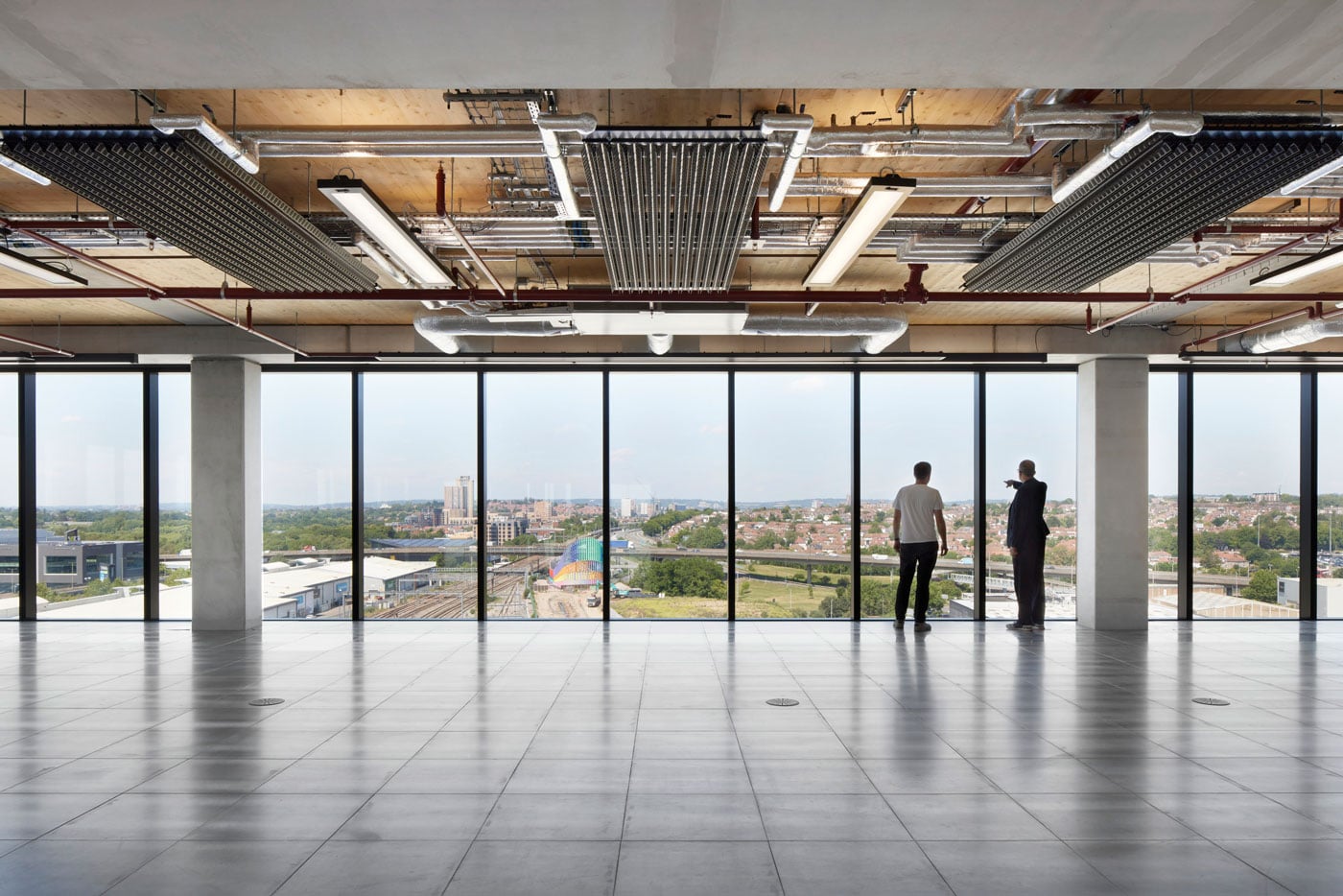
4 Arbour Street, Brent Cross Town
The ability to maintain this draw stems from a place driven response to an opportunity, be it a gateway plot to a wider masterplan, the revitalisation of a pre-loved asset, or a carefully crafted tech led new build. All have varying characters, created uniquely for their placement and in many cases creating a new address to the place itself.
Our flexible approach to workspace positions commercial projects as enablers that kick-start renewal and masterplan delivery. Early on, we adapted historic workplaces like Fort Dunlop and Soapworks, the former Colgate Palmolive factory, into flexible Cat A workspace within re-imagined places that carry the histories of generations of working people, re-igniting employment in the area. Now, our continued approach is to create flexible buildings that enable workspaces to react to the market and changing ways of working and living, re-inventing perceptions of areas such as East Croydon and Brent Cross. This is a vision we’re currently extending beyond existing structures or new masterplans, to the repositioning of Cambridge Science Park.
In an environment of rapidly changing market trends, shifts in national investment models and regulatory and technological advancements, we work closely with our clients, research teams and agents to understand what tenants want, what they need, and integrate innovative design approaches to create cost-effective, future-ready workplaces.