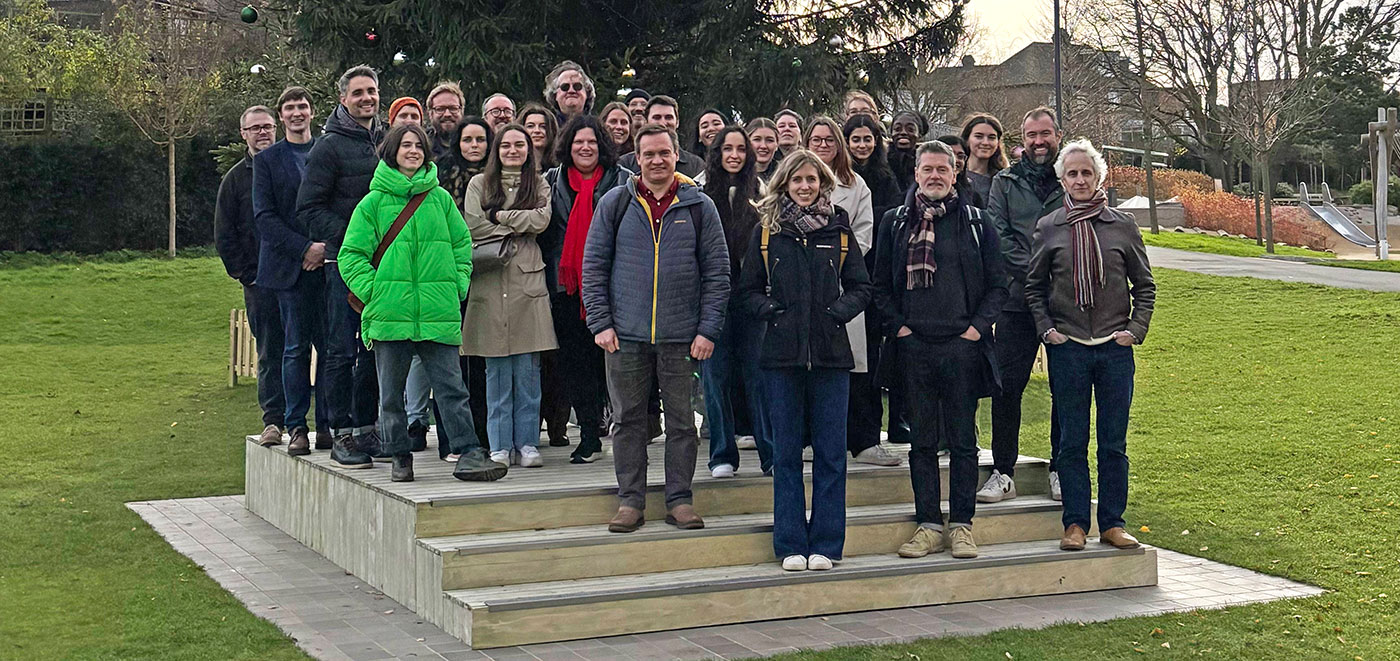
at shedkm, we’ve always believed that architects have a significant role to play in driving positive change.
Our founding principles centred around equity, inclusion, and the idea of a wider common good, so becoming a B Corp in 2023 felt like the perfect way of putting our social and environmental values at the heart of our organisation and activities.
Here, head of people and culture, Karo Bryant, and practice director, Ian Killick talk about why B Corp is so important to our culture, community, and clients.


why did shedkm decide to become a B Corp?
Ian: B Corp attracted us because it seemed to offer a way of measuring many of the intangible aspects of how shedkm had always operated – our non-hierarchical governance; our studio ethos of collective endeavour from which everyone benefits; our interest in regeneration and reuse as a way of making positive change in neglected places.
Everyone suddenly had ESG policies, including us, but B Corp accreditation offered a strict external evaluation of how we actually operate, not just what we claim to do. We became the first architectural practice in our region to become a B Corp – others have followed.
Karo: We became a B Corp in summer 2023, following our decision to become employee-owned in 2022. Both major changes, planned to safeguard what’s important to us.
shedkm has always valued people, place, and materials. We took a retrofit first approach before the word really existed, pushed innovation as an early adopter of MMC to reduce construction impacts, and always place critical importance on our whole team.
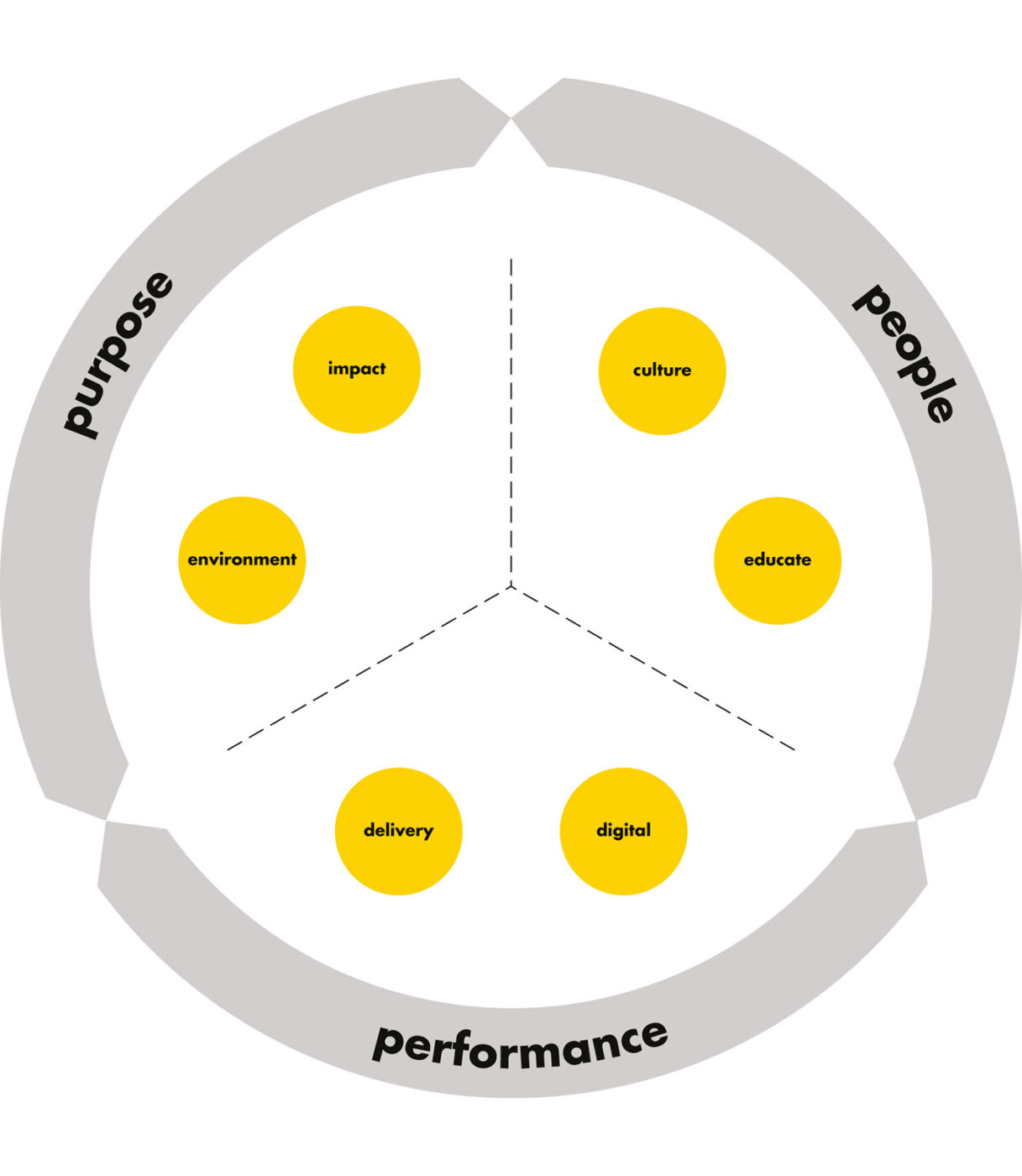
One of our original founders initially suggested B Corp seemed aligned with our existing values of “purpose, people, performance”. Climate action is a lived value that’s important to the entire team, so B Corp accreditation was a way to focus our collective knowledge with an external framework for continuous improvement.
Diagram showing shedkm’s internal atelier structure
what impact has B Corp had on shedkm so far?
Karo: For most accreditations that require considerable effort (and B Corp definitely does!) the outcomes tend to focus on commercial gain or legislative compliance. But that’s not why we did it. Whilst B Corp might boost sales of consumer products, it doesn’t do the same for us – clients already come to us because of our ability to deliver environmental innovation and our re-use first approach (for instance the hybrid CLT commercial building 3 Copper Square for Related Argent, or adaptive re-use of a post-war car park into homes for Capital&Centric).
Rather, B Corp has been a way for us to support our purpose from within. At our annual EO assembly, some of our team raised their frustration that the increased legislation and viability demands of the current economic climate seem to have diminished the industry’s focus on sustainability and net zero targets. B Corp gives us a framework to recentre that work.
It has also helped us pinpoint where we have the most capacity for impact. While our design and specification have a large capacity to make a difference, there are also limits to our control. Meanwhile we do have sway over immediate impacts such as becoming a Living Wage Employer and lobbying our landlords to make better aligned choices: changing energy suppliers, cleaning products, and paying an uplift on our Head Office cleaning contract to ensure our cleaners earn the living wage.
what do you see as the future opportunities for B Corp?
Karo: B Corp could be a powerful movement for our industry, a reminder for the wider architecture profession to take pride in our capacity for impact in the teams we’re building, the communities we design for, and the planet we’re impacting for future generations. Many practices are doing incredible work and if we can harness B Corp community to work outside our silos, the future can be brighter.
The changes B Corp have made to accreditation aim to formalise this potential, with new sections on government affairs and collective action, environmental stewardship and circularity, and climate action.
We’d also love to see B Corp capture a wider part of the supply chain – imagine the impact if more professions such as cost consultants and contractors joined, widening the reach of collective action for the industry as a whole?!
For shedkm, B Corp has prompted us to track practice carbon emissions and create a carbon reduction plan, and we’re working on emissions data to support clients with their scope 3 reporting. This is just the beginning, with the plan helping us embed continuous improvement into the practice.
Ian: Our B Corp status is an increasingly recognised, useful accreditation that is having a tangible impact on the practice, cutting through much of the posturing and hot air around environmental and social value. It provides us with a clear structure and set of actions for us to continue pushing our impacts and our collective goals as One Practice.